Frame from a nitrate film showing damage to the emulsion. The image is of someone's hands gutting a fish.

Araya (1959) and Morichales (2024)

This post is part 3 of 3 in a short series about extraction and film.

I’m returning to Brian Jacobson’s book, The Cinema of Extractions, because I struggled with its ending, which presents Araya (Margot Benacerraf, 1959) alongside Scenes of Extraction (Sanaz Sohrabi, 2023) as examples of potential “counter-cinemas of extraction” which refuse “extractive world-making” (p. 145). Araya, an austere and precise account of life in an impoverished coastal village in Venezuela, is an extraordinary film. Its restoration – against all odds, overcoming institutional collapse and tropical weather – is a wonder. It’s a film that deserves its place among the great, and that should be watched and discussed widely. But I don’t agree that its form challenges extractive ways of seeing.

At Alchemy Film Festival, the closing screening of Araya was preceded by a live event that connected this story of salt with the larger question of extractivism, which in Venezuela has mainly meant oil. The 1981 satirical short Mayami Nuestro (Carlos Oteyza) captures the boom-times, where petrodollars flowed through Venezuelan consumers and towards the US; one way or another, the wealth from extraction goes elsewhere. But when the flow is interrupted (for instance through political upheaval), it’s still the local population that suffers more. In Latin America we have learned that the one thing that’s worse than being exploited, is to not be. If needs must, we go to the metropolis to seek our chance to be exploited there directly. While the films were screened, artist Esperanza Mayobre performed her 2005 work Immigration Services, which turns the migrant’s hopes into a prayer, where getting a green card is a kind of miracle. In the two decades since this piece was first performed, over seven million Venezuelans left the country, many of them walking the horribly dangerous Darien gap route, hoping to present themselves at the US border. Those who succeeded and those left behind may now be waiting to see what the US does after their removal of Maduro and the start of negotiations with oil companies. Extractivism creates and requires dependency, to name-drop another Latin American idea.

It was in this context then that we watched a selection of ‘offcuts’ from Araya, introduced by their restorer Andrés Prypchan. These silent fragments, retaining the crisp cinematography and formal composition characteristic of the film, are doubly powerful by virtue of not having the narration and by being removed from the circular structure of the whole. In Araya, much emphasis is placed on repetition. The backbreaking labour of dredging up and drying out the salt is repetitive, and it dictates the rhythm of each day, identical to the next. Other forms of labour, from fishing to pottery, are also arranged around this in their own loops, all supposedly part of a “closed economy”. Except that this is not a closed circuit: at the end, a ship comes and is loaded with salt, and some money is exchanged by middlemen. We have followed the salt in rigorous detail from the sea waves to here, but no further: who is profitting from the salt miner’s exhaustion? The circular form, for me, naturalises human misery, making it a consequence of scarcity rather than exploitation; the form of the film thus disguises the historical form. People toil to take salt from the sea: this salt goes somewhere, along with the profit it generates, but this vector goes almost unseen.
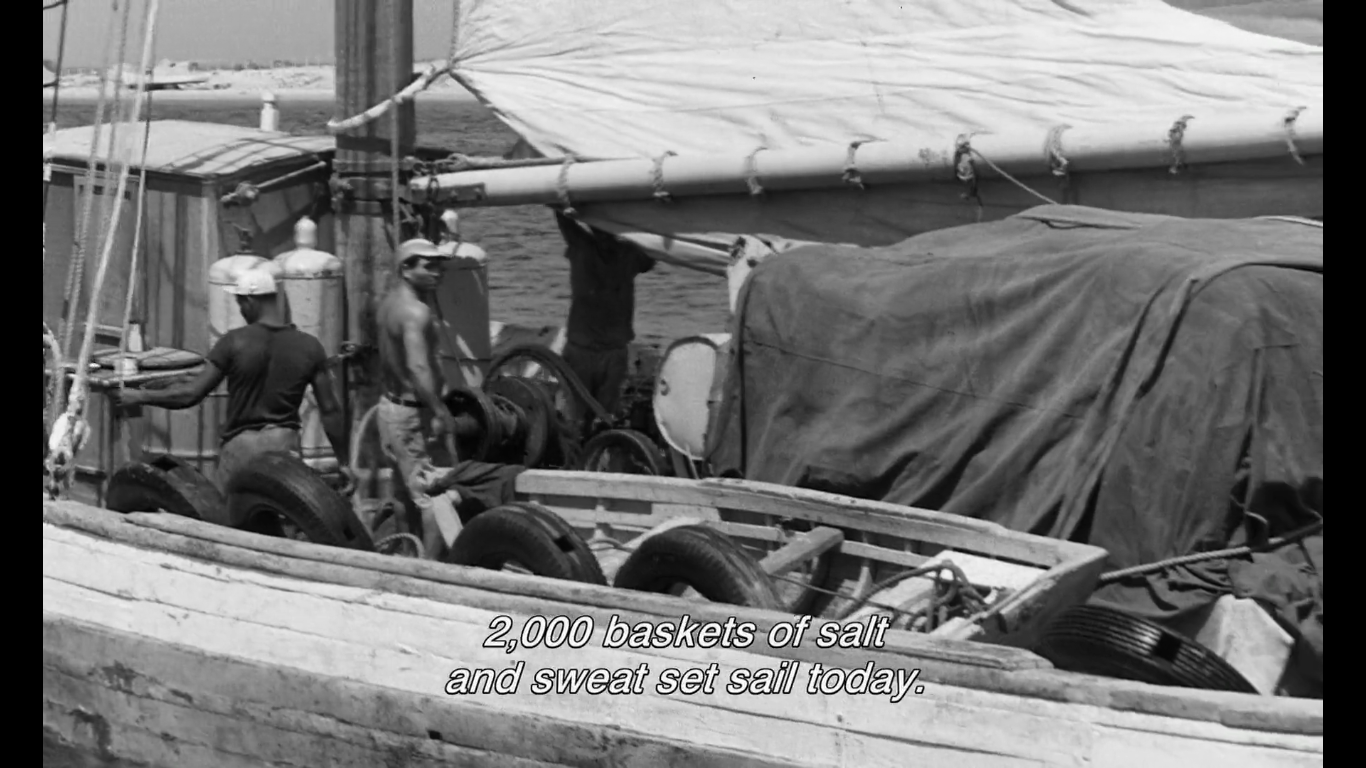
Still from Araya (1959). Black and white image of a sailing boat with two men standing in it. The subtitle says "2000 baskets of salt and sweat set sail today"
Still from Araya (1959), from the Internet Archive

The narration’s humanist framing serves to further depoliticise its analysis, as it undermines the salient specificity of the images and of the people. Their voices are mostly present as collective hubbub or elegiac singing, while their experience is interpreted by the author, the French poet Pierre Seghers. I admit I have not read up on the film’s production history, which might reveal more about the creative choices and material factors that shaped the film. Benacerraf’s archives suggest that she was motivated in part by the imminence of change through a state modernisation project. Towards the end, when mechanical diggers arrive in Araya, the voiceover offers a melancholic presage of the possibility of modernisation. The machinery shots have a noticeably different photographic quality with much more grain and less precise focus, as if it had been shot on smaller gauge or less sensitive stock. This accident of shooting (Prypchan confirmed that this was shot at a later date by a different camera operator), and the clashing musical scores, intensify the contrast between the prosaic mode of the industrial film and the poetic gestures of the art film. Still, I wondered who could not be rooting for mechanisation after the wretchedness of manual labour we had just been asked to witness. I wondered what the salt miners would have said, had they been asked.

The same question could have been posed to the people in Morichales (Chris Gude, 2024), a film that could be a contemporary Araya, also formally uncompromising and driven by a ponderous narration. It was also shot in Venezuela, although far inland, where the ancient currents of the Orinoco river have dissolved specks of gold into the jungle soil. To get at this gold, men hire diesel pumps and diggers to liquify the soil and subject it to various vexations, leaving behind orange wastelands that can be seen from space. As an essay, the film narration doesn’t say anything that isn’t known. It considers the mismatch between price and value, the lack of value of the gold miner’s toil, the even greater lack of value of those who buy and trade the metal, the subsumption of the real value of life beneath the price of gold. It is almost inconceivable that people live like this, waist deep in mercury-laced mud, and indeed that they choose to live like this above the alternatives available to them, however meagre. They’re not invited to tell us why. The narration instead makes the miner into an archetype of compulsion, a sinner whose only hope of redemption is finding that promised nugget. Even though the film is close, very close to their sunburnt backs and their seeking hands, it stands back in judgement.

There are elements of a more systemic analysis here, with this moral judgement falling also on the global networks that draw on this miserable labour. The uselessness of their suffering is even more unbearable when you remember that most of that gold will sit in a vault doing nothing. But – like the merchant boat in Araya – only the edges of these networks are visible from here, and so we see extraction (“the act itself”) rather than extractivism (“the larger system by which natural resources are taken from one place and moved to another”). A counter-cinema, an anti-extractivist cinema perhaps, would need to be both alive to the webs of relations and committed to the specificity of each site and form of extraction. And this cannot be done without the voices of those whose bodies are spent, broken and poisoned in the process.


Fragment of a photograph showing a group of men taking down a shop sign as part of a street protest. Photo is from revolutionary period in Iran, from BP archives, included by Sanaz Sohrabi in her film.

Can the extractive image break free?

This post is part 2 of 3 in a short series about extraction and film. Part 1 is here: Scenes of extraction

Cinema’s role in bringing about climate catastrophe is linked to its construction of resource imaginaries, as much as to the production of operational images. There are different levels to this relationship. Some of the research gathered in the foundational collection, Petrocinema (ed. Dahlquist and Vonderau, 2021), focuses on the oil film’s mission of legitimating extraction by making it appear necessary to the viewer’s wellbeing, and enmeshed with pleasure at every turn. The better known examples make this a global endeavour, telling variations of a well-worn story about oil and progress whether in Iran, Nigeria, or Scotland. Once you’ve seen a few of the hundreds of films in the BP Video Library, it’s not hard to predict what others will be saying, and what they continue to say.

Sanaz Sohrabi’s 2023 film Scenes of Extraction, which I mentioned in the previous post, goes deeper, to a geological level: through seismography, the earth becomes a medium for sound, and sound can then be translated into images, to layer onto maps that guide the oil company towards the hidden treasure. This is the realm of the operative image, here a sound-vision assemblage that supports decision-making leading to investment and subsequent drilling. For the oil company to be there in the first place, though, political interventions are necessary. Mona Damluji’s infrastructural approach in Pipeline Cinema (2025) shows the extent to which corporate PR setups meld with, and sometimes replace, other cultural systems. It is not only about using images to tell a story, but about controlling the means through which stories are told, images made, and relationships woven. In an earlier film, One Image, Two Acts (2020), Sohrabi shows us reams of extremely sharp, beautifully shot photographs from the BP Archives. She argues that, in Iran, Britain (via the Anglo-Iranian Oil Company, now BP) ‘maintained an image-based monopoly through photography and film’, denying Iranians the means of representation. Where Scenes of Extraction exposed how land was abstracted into a legible medium, this one showed the abstraction of labour into disciplined bodies.

And yet the image exceeds this characterisation. The images are too sharp and detailed, so that each person in a crowd has a face and an expression. A foot is suspended mid-air as someone jumps over a length of pipe. Roland Barthes called this sort of poignant detail punctum, as any photography student has heard at some point:

“the element which rises from the scene, shoots out of it like an arrow, and pierces me” (Camera Lucida, p. 26)

The punctum is what unsettles the viewer, it is what breaks the ‘unary’ representation or story that a photograph may have intended, an intrusion of reality’s accidental nature (and of inexorable mortality) that gives the lie to the illusion of narrative control. Punctum is a kind of excess. In traditional film scholarship, excess is one of those cracks through which the ideological apparatus shows itself, undermining the stability of linear narrative. Punctum maybe is also a kind of attraction: Brian Jacobson’s conceptualisation of Cinema of Extractions refers back to Tom Gunning’s very productive framework, where early cinema’s exhibitionism is only partially subsumed within narrative voyeurism. With punctum, reality insists in showing itself against the story in which the photographic composition is trying to implicate or suture the viewer.

The insistent characterfulness of these images puts tension on Sohrabi’s argument. If the photos were part of the oil company’s efforts to compartmentalise, abstract and dehumanise workers, they succeed only partially, or only from certain angles. What they have also done is to leave a historical record which can be reclaimed: they have created a space for a political demand. Sohrabi poses a question about the right to the image, both on an individual level (for the people in these pictures) and on a collective one, regarding access to the means of cinematic representation.

The question of what a “cinema of reparations” would entail has been raised in various spaces. I turn to Alice Diop’s definition of her own practice, as a cinema that not only puts on screen people who have not been represented before, but does so by building “a whole device” for their appearing so that the image has power. If powerful images are those “that are there, that are addressed and that profoundly resist erasure”, the production of this power contains aesthetic choices, taking us back to the politics of form.

The last section of Sohrabi’s film gathers a few examples of what a different image of oil could be, a question that became generative for anti-colonial and revolutionary filmmaking. She closes her film with an sequence from Iranian New Wave feature The Runner (Amir Naderi, 1984). A group of children race across an arid landscape towards a block of ice which is melting rapidly in the heat of the burner flames of a pipeline. An interview with the director explains how the images were assembled in different places while representing his hometown, oil capital Abadan, which was being bombed during the Iraq-Iran war. This act of piecing together a remembered landscape through editing is then also an act of resistance, perhaps of restoration. This elemental set-piece of fire, ice, dirt, and human effort works through a finite number of carefully composed camera positions that bring those elements into intense relation. The editing iterates the shots to stretch time, to make you feel the unbearable heat, the hard ground, and the sough-after coolness of the ice. The spectacular attraction of fire becomes monstrous in repetition. It is indeed a powerful image and one that is hard to forget. Sohrabi sees it as somewhat spectral, a ghostly trace evoking the absent images of the workers.

Are the pictures missing, or held hostage? A cinema of reparations can be one of new images, repairing an absence, and it can also be one of liberated images that were made for oppression. The question of what to do with colonial archives needs to be led by those who were dispossessed by them.

To read part 3: Araya (1959) and Morichales (2024)

Negative image of section of a map showing the Abadan area in Iran with its oil infrastructure

Scenes of extraction

I’ve had a browser tab open since March 2024. It’s the page about Scenes of Extraction (2023) on filmmaker and researcher, Sanaz Sohrabi’s website. I kept it there as a reminder and pledge to write about the film after I watched it at Glasgow Short Film Festival, and it stayed there for two years. The scrawled notes taken in the dark of the CCA cinema become less legible over time, and the memory of the film becomes less detailed. Less detailed, but still insistent: its description of reflection seismography has become the way I enter those current philosophical discussions about elemental media, and its cut-up and reframed archives of the early Iranian oil industry are how I think about visuality and extraction, about operational images, about – as Sohrabi puts it – “the nexus of seeing and destroying”.

This is the last film discussed in Brian Jacobson’s 2025 book, The Cinema of Extractions, and in the book it is presented in dialogue with Araya (Margot Benacerraf, 1959), which was the closing film at Alchemy festival on May 2025. I had to finish this blog post, not just to organise my thoughts but also to show public gratitude to the people who put on festivals and make these encounters with film possible. I’m returning to it now after another curated encounter with Sohrabi’s work via the Centre for Energy Ethics’ online reading group. This time, we got to watch One Image, Two Acts (2024), while also reading a section of Mona Damluji’s new (open acccess!) book, Pipeline Cinema (2025), which places the moving image as part of the “cultural infrastructure” of the oil industry in Iraq and Iran. I’ll come back to Sohrabi’s films in the next post, and to Araya in a third one.

My blogging backlog has the benefit of showing how the theme of ‘extraction’ has continued to proliferate across scholarly collections, calls for papers, and festival programmes over the last few years. It is used to articulate new and old materialisms, to claim a political dimension in ecocriticism, to redirect attention to minoritised media, and to reappraise industrial and sponsored film. You can do lots of things with extraction. At the same time, the growing choice of ‘extraction’ rather than ‘extractivism’ gives me pause. They are different words, of course. As Thea Riofrancos defines them, “Extraction is the act itself, extractivism is the larger system by which natural resources are taken from one place and moved to another with minimal processing”. Much of the theory work that has enabled this analysis comes from Latin American lineages of ideas, what Riofrancos describes as the extractivismo discourse. As some of the concepts have been brought out of political economy and into humanities disciplines, this genealogy tends to recede from view.

An extractivismo framework applied to the analysis of film and other media can take many forms, and in the best examples, it also enacts self-reflection. It can help researchers and filmmakers to consider how their own actions can be extractive, even extractivist (when one considers the global disparities that shape how academic knowledge circulates, how it is valued, and who benefits from it, for instance). It thus needs to be reflexive on its own use of this framework. I’m not saying anything new by pointing out how concepts that emerge from political struggles can get defanged and appropriated by academics; it happens all the time. I also wouldn’t be interested in a purely self-regarding discipline that isn’t in dialogue with all others and with the world. We just have to try and be honest about it, which isn’t easy.

Regardless of what I might write in funding applications, I’m not convinced that analysing films is a meaningful way to bring about a better world or support the people putting their lives on the line for it, which doesn’t mean it’s not worth doing. In his book, which I reviewed for the HJFRT (apologies for the Taylor & Francis paywall, pre-print here), Jacobson makes the case for textual analysis, drawing on literary and art-history concepts. The emergent ‘eco-formalism’ is part of a very long discussion about the politics of form and the political potential of formal critique. In the next two posts I’ll muddle through my own encounters with films about extraction as I try to figure out what I think about this.

Next up:

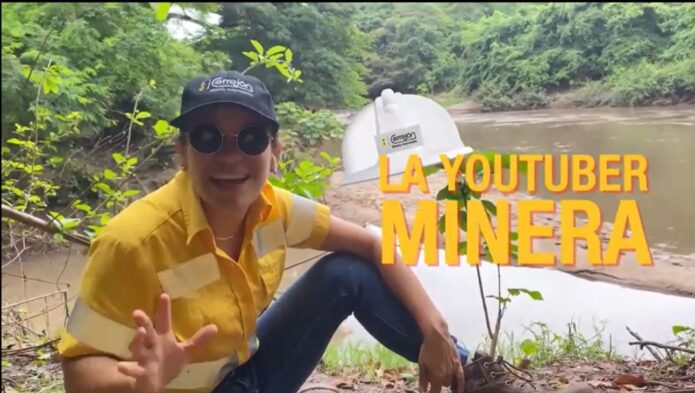
Still from a YouTube video titled "Aquí sí se habla de Bruno", posted in May 2022

Coal’s influencers

The fossil fuel industry has a long history of using all available media to defend its legitimacy. This has often been in direct response to campaigns for regulation and the reduction of environmental impacts, or as a crisis management strategy during oil spills and similar disasters. Exxon has been the most notorious company due to the extent and depth of its PR systems, and it is now well known that this influence was used in the 1970s and 80s to sow uncertainty about the causes of global warming. Long before this, Exxon had established multiple networks of cultural co-optation across its global operations by sponsoring arts and literature. In Colombia this was done through the Lámpara magazine, funding of modern art exhibitions, literary prizes and even film preservation.

It is thus unsurprising to find that large mining companies, such as Glencore, current owner of Carbones del Cerrejón, are still investing in creating a positive image for extractive industries, and that they use the media with the greatest reach to do so. Nowadays, presence on social media is crucial to public relations, and it requires faster response times to media debates and crises. Platforms such as YouTube and TikTok allow communities affected by mining, as well as environmental, human rights, and labour organisations to denounce violations and launch public campaigns against corporations. This creates scenarios for discursive confrontation.

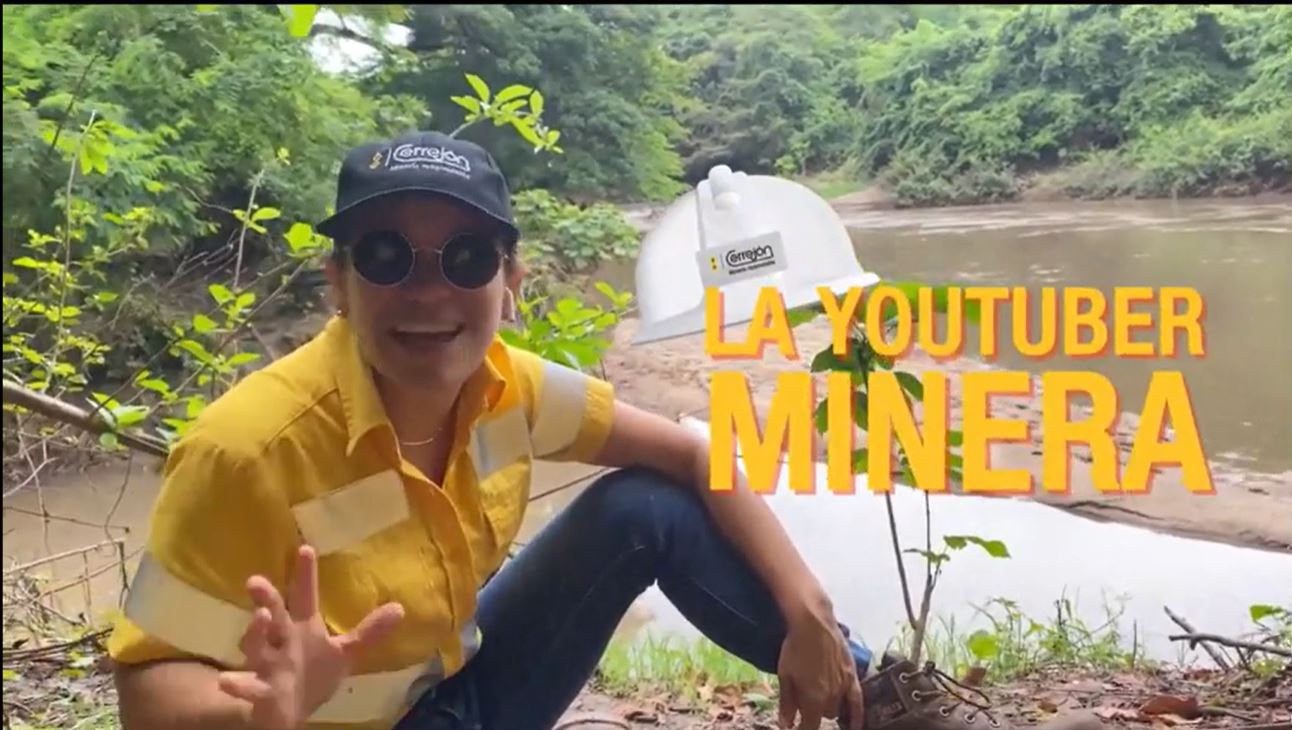
On 14th July 2021, Cerrejón Colombia’s official YouTube channel posted the first video in a series tagged as #LaYouTuberMinera (“The [female] Miner YouTuber”). The Miner YouTuber introduces herself as Joyce Romero, a young woman wearing the corporate yellow polo shirt and hard-hat. She is an effective communicator, using friendly, persuasive language on fast-paced videos adorned with sound effects and graphics. Over the following few months, the channel published 19 videos in this series, ending in October 2022. They covered topics such as the company’s efforts to control Covid-19, the presence of women in several roles, and the wellbeing services available to mine workers. The main topic, however, is the explicit defence of the company’s environmental policies.

The first video posted by the YouTuber is titled “The Bruno is very alive”, and it is a response to the accusations from communities and other observers about the disastrous consequences of the deviation of the Bruno stream, which was carried out in order to expand the opencast mine. In particular, the video seems to be a response to content published by the channel La Guajira le Habla al País, a campaign led by the Colombian filial of the international NGO Friends of the Earth. For instance, in September 2019 this channel posted a 10-minute video titled “Destruction of the Bruno stream, a crime against nature”, which records a walk through the dried-out bed of the stream, and gathers testimonies from local community leaders about the impact this has had.

In May 2022, the YouTuber returns to the Bruno stream to present a list of 10 points that would show the success of the stream’s re-routing, which had been carried out five years earlier and in disregard of a High Court decision. These arguments are presented in a somewhat more combative style, referring to the resurgence of online debates and urging people to listen to the facts. Thus, the video appeals to technical and scientific forms of knowledge, such as ecological surveys, measurements and expert visits to the stream and its surroundings. This kind of content (photos, graphs, and videos showing visits by environmental professionals and university students) is widespread on the company’s social media. Overall, they construct the river as an object defined by its physical characteristics, rather than its relationships. In fact, one of the ten points argued in the video is that “there were no communities” in the area of re-routing. This glaring contradiction with the videos by other organisations reflects what Arturo Escobar calls an ontological conflict: The stream is not the same thing, it isn’t defined in the same way (including the boundaries of the affected area) by the different parts in the dispute.

The Miner YouTuber collection is interesting because it displays a range of discourses for the legitimation of extractivism. There are videos highlighting fiscal contributions and aid to the region and local communities; others foreground the myriad applications and uses of mined products; others focus on job creation, particularly on the opportunities offered to women and to Indigenous people. Many of these strategies were already present in 1980s media around the set-up of the mine. In this initial rhetoric, there is a promise of containment: the mine’s impacts are acknowledged, but they can be limited in space and time. As the mining operation has perpetuated itself, and its scale has continued to grow, these containment arguments have given way to a rhetoric of restoration. On the Miner YouTuber videos, the mining company appears as a great force for the transformation of the land, applying scientific approaches to re-create ecosystems after it has destroyed them. This emphasis on the possibility of restoration is consistent with the techno-optimist logic of the fossil fuel industry, which intends to continue on its course while also buying carbon offsets, or planting forests, or doing geoengineering. This chipper tone is very suitable for social media platforms.

In September 2022, we first hear from Rosa Daza, “La Tiktoker Cerrejonera” (The TikToker from Cerrejon). Her content is very similar to Joyce Romero’s, emphasising the benefits of mining, offering glimpses into the behind-the-scenes operations, and touching lightly on gender and ethnic diversity. From the first video, Daza establishes her identity as a local woman and part of the workforce, and affirms her trust on the idea of “responsible mining” or “mining done well”. Addressing the viewer directly, Daza invites them to “chat together”. The video has received over 120 comments, most of them asking for information or help to get a job at the mine. This already shows the perception of the company as an aspirational workplace, with better wages than those available elsewhere in the area, and it points to the huge challenges for a just energy transition in extractive zones where possible futures have been ‘captured’ (Jaramillo y Cardona 2022).

@cerrejoncolombia

👷🏽‍♂️👷🏻‍♀️ Aquí comienza un nuevo canal para contar sobre la MineríaBienHecha. Conoce a Rosa Daza, nuestra Tiktoker y anfitriona en esta nueva aventura. ¡No te despegues! #tiktok #fyp #colombia #mineria

♬ sonido original – Cerrejón Colombia

On the same TikTok channel, the company shares videos of cultural events, Mother’s Day greetings, and celebrations of the national football squad’s victories, among other things. This social media content is thus comparable to older corporate communications formats, such as print magazines or radio shows with light-hearted, positive, varied subjects. There’s an emphasis on the opportunities the mining company offers to women and minorities. Another TikToker is tasked with creating didactic content in Wayuunaiki language, always with Spanish translation and addressing non-Indigenous audiences.

Several of the videos are tagged #SomosNaturaleza (We Are Nature). One of them is titled “Scientific study about mining and biodiversity“, and it consists of a series of short, well-rehearsed direct address segments by three employees in the environmental section of the company, recorded out on the field in a forest area. The Environmental Manager says that this scientific publication “shows that the land rehabilitation carried out by Cerrejon has resulted in a positive strategy for the restoration of wildlife habitats”. The Compensations Superintendent comes in to explain that the article mentions the return of bats and beetles to areas where coal extraction has ended, and the effectiveness of a biological corridor between two mountain ranges. The Compensations Analyst highlights Cerrejon’s contribution to knowledge about ecological restoration processes through its monitoring systems.

@cerrejoncolombia

#SomosNaturaleza | 🌿🌳 Artículo científico de revista internacional, destaca que la rehabilitación de tierra llevada a cabo por Cerrejón, ha resultado en una estrategia positiva para la restauración de hábitats para la vida silvestre.

♬ sonido original – Cerrejón Colombia

It is interesting then to look at the cited article, to understand the framing strategy used here:

Franco-Rozo, M.C. et al. (2024) ‘Biodiversity responses to landscape transformations caused by open-pit coal mining: An assessment on bats and dung beetles in a Colombian tropical dry forest’, Environmental and Sustainability Indicators, 21, p. 100335. https://doi.org/10.1016/j.indic.2024.100335.

The article starts with the unsurprising finding that “there is an effect of mining activities on richness, abundance, and diversity of both bats and dung beetles, where, with increased mining activity these indicators are reduced by intensified land use, and this response increase nears the open pits area”. It is true that rehabilitation strategies allow for the return of some species, but not all: there is an ongoing impact on biodiversity. The article highlights the importance of compensation areas, that is, zones that are kept untouched by mining. While it argues that the restoration of some areas can contribute to reintegrate biodiversity corridors, these are supplementary to conservation. In other words, rehabilitation and compensation work to some extent, but only if we accept the destruction of the original habitat as an inevitable starting point, which is to say, if we accept that large-scale mining is an unavoidable activity.

The Censat/CINEP report, Does Cerrejón Always Win? (2023), concludes that: “Despite promises
of social and economic development and after four decades of mining by Carbones del Cerrejón, not only has there been no reduction in poverty, but there has been a deepening and unprecedented humanitarian crisis.” It also reports several instances of human rights violations, forced displacement of communities, and inaction on judicial decisions. Facing such accusations, Glencore claims it is a ‘committed’ and responsible company, “a company that focuses on helping the communities and countries in which it operates”. Despite the relative abundance of alternative media, Glencore’s PR machine across different platforms often manages to take up the discursive space and delegitimise its critics. In this context, the YouTuber and the TikToker play interesting roles, mobilising their communication skills and their identities as young women with a local connection.

Las influencers del carbón

La industria de los combustibles fósiles tiene una larga historia de usar todos los medios de comunicación disponibles en un momento dado para defender la legitimidad de sus actividades. Muchas veces esto ha sido en respuesta directa a campañas que buscan la regulación de la industria y la reducción de sus impactos, o como estrategia de manejo de crisis en emergencias como derrames petroleros. Tal vez la empresa más famosa por la intensidad y extensión de sus sistemas de relaciones públicas ha sido Exxon, de quien se sabe que en las décadas de 1970 y 1980 usó su influencia para sembrar incertidumbre sobre las causas del calentamiento global. Pero mucho antes de esto, en todo el mundo, el sistema de comunicaciones de Exxon había creado redes de cooptación cultural, a través del apoyo a las artes y la literatura, por ejemplo, bien representado en Colombia por la revista Lámpara.

No es por tanto sorprendente encontrar que grandes mineras como la compañía suiza Glencore, actual propietaria de Carbones del Cerrejón, siguen invirtiendo recursos en construir una imagen positiva de la industria extractiva, y que usan los medios con mayor alcance para lograrlo. Hoy en día, la presencia en redes sociales es crucial para las relaciones públicas, y requiere una actividad de respuesta mucho más rápida a los debates y crisis mediáticas. Las plataformas como YouTube y TikTok permiten a las comunidades afectadas por la minería, así como a organizaciones ambientalistas, de derechos humanos, o sindicalistas, hacer denuncias y montar campañas públicas contra las empresas. Esto crea escenarios de confrontación discursiva.

El 14 de Julio de 2021, el canal oficial de Cerrejón Colombia en YouTube publicó el primer video de una serie identificada como #LaYouTuberMinera. La YouTuber Minera se presenta como Joyce Romero, una mujer joven vistiendo la camisa y casco de dotación de la empresa. Es una comunicadora eficaz, con un lenguaje amigable y persuasivo, en videos editados con un ritmo rápido, efectos sonoros y gráficas. Durante los siguientes meses, el canal publicó 19 videos en esta serie (el último en octubre de 2022), cubriendo temas como las acciones de la empresa para el control de la pandemia de Covid-19, la presencia de mujeres en varios cargos, y los servicios de bienestar con que cuentan los trabajadores de la mina. El principal tema, no obstante, es la defensa explícita de la política ambiental de la empresa.

Still from a YouTube video titled "Aquí sí se habla de Bruno", posted in May 2022
Imagen de uno de los videos de la YouTuber Minera, publicado en Mayo de 2022

El primer video publicado por la YouTuber se titula “El Bruno está muy vivo”, y se trata de una respuesta a las acusaciones de comunidades y observadores sobre las consecuencias catastróficas que ha tenido la desviación del arroyo Bruno para la expansión de la mina. En particular, parece una respuesta a los videos publicados por el canal La Guajira le Habla al País, una campaña orquestada por CENSAT Agua Viva, que es la filial colombiana de la ONG internacional Amigos de la Tierra (Friends of the Earth). Por ejemplo, en septiembre de 2019, este canal publicó un video de 10 minutos titulado “Destrucción del Arroyo Bruno, un crimen contra la naturaleza“, en donde se documenta un recorrido por el cauce seco del arroyo y se recogen los testimonios de líderes de las comunidades locales sobre el impacto que ha tenido.

En Mayo de 2022, la Youtuber regresa al arroyo Bruno para presentar una lista de 10 puntos que mostrarían que la modificación del cauce del arroyo, hecha cinco años atrás, ha sido exitosa al preservar el caudal. Estos argumentos se presentan de manera algo más combativa, haciendo referencia a una reactivación de las polémicas en redes e instando a discutir con datos. Así, el video apela a formas técnicas y científicas de conocimiento, refiriéndose a los monitoreos, mediciones y visitas que se aplican al arroyo y su entorno. Este tipo de contenidos (fotos, gráficas, y videos mostrando visitas de profesionales ambientales y estudiantes) abundan en las redes sociales de la empresa. En su conjunto, construyen el arroyo como un objeto definido por sus características físicas, más que sus relaciones. De hecho, uno de los 10 puntos presentados en el video es que en la zona de la modificación “no había comunidades”. Esta evidente contradicción con los videos de las organizaciones locales da cuenta de lo que Arturo Escobar llama un conflicto ontológico: El arroyo no es lo mismo ni tiene las mismas definiciones (incluyendo los límites de la zona de afectación) para las distintas partes en disputa.

La colección de la Youtuber Minera es interesante en tanto que muestra la variedad de discursos de legitimación del extractivismo. Hay videos que resaltan las contribuciones fiscales y en ayudas a las regiones y a las comunidades; otros que destacan todas las aplicaciones de la minería; otros que se enfocan en la generación de empleo, incluyendo oportunidades para mujeres y para miembros de comunidades indígenas. Muchas de estas mismas estrategias ya estaban presentes en materiales de la década de 1980 en torno al montaje de la mina. En la retórica inicial se privilegia una promesa de contención: los impactos se reconocen, pero se pueden limitar en el espacio y el tiempo. A medida que la operación de la mina se ha perpetuado, y su extensión ha crecido, estos argumentos de limitación han dado paso a otros de restauración. En los videos de la Youtuber Minera, Cerrejón aparece como una gran fuerza de transformación del territorio, aplicando enfoques científicos para re-crear ecosistemas tras haberlos destruido. Este énfasis en la posibilidad de restauración es coherente con la lógica tecno-optimista de la industria de los combustibles fósiles, que pretende que se puede seguir el mismo curso pero al mismo tiempo comprar bonos de carbono, o sembrar bosques, o hacer geoingeniería. Es un optimismo bastante acorde con el tono de estas redes sociales.

En Septiembre de 2022, aparece Rosa Daza, “La Tiktoker Cerrejonera”. Sus contenidos son similares a los de Joyce, haciendo énfasis en los beneficios de la minería, dando acceso al ‘tras bambalinas’ de la mina, y tocando temas de inclusión de género o de lengua Wayuunaiki. Desde su primer video Daza afirma su identidad como mujer local y “Cerrejonera”, así como su confianza en la idea de “minería responsable” o “minería bien hecha”. Hablando directamente al espectador, Daza le invita a “conversar juntos”. El video tiene más de 120 comentarios, de los cuales la gran mayoría piden información o ayuda para conseguir un empleo en la mina. Esto ya indica la percepción de la compañía como buen empleador, con salarios mejores de los que se pueden obtener en la zona, y demuestra los grandes retos de la transición energética donde ha habido una ‘captura’ de los futuros posibles (Jaramillo y Cardona 2022).

@cerrejoncolombia

👷🏽‍♂️👷🏻‍♀️ Aquí comienza un nuevo canal para contar sobre la MineríaBienHecha. Conoce a Rosa Daza, nuestra Tiktoker y anfitriona en esta nueva aventura. ¡No te despegues! #tiktok #fyp #colombia #mineria

♬ sonido original – Cerrejón Colombia

En el mismo canal de TikTok la compañía ha compartido otros videos, destacando eventos culturales, efemérides como el día de la madre, o apoyando a la Selección Colombia en los partidos de la Copa América. En este sentido, el contenido de estas redes es comparable con formatos más viejos de las comunicaciones corporativas, como las revistas impresas o magacines radiales con enfoques ligeros, variados y positivos. Hay un énfasis repetido en las oportunidades que ofrece la empresa minera para las mujeres y para personas de minorías étnicas; otro comunicador se encarga de crear contenidos didácticos sobre la lengua Wayuunaiki, siempre con traducción al español y dirigidos a audiencias no indígenas.

Varios videos llevan el hashtag #SomosNaturaleza. Uno de ellos se titula “Estudio científico sobre minería y biodiversidad“, y presenta una serie de piezas a cámara, bien coordinadas, preparadas y memorizadas, por tres trabajadores de la parte ambiental de la empresa hablando desde una zona de bosque seco. El Gerente de Gestión Ambiental habla de una publicación científica que “destaca que la rehabilitación de tierra llevada a cabo por Cerrejón ha resultado en una estrategia positiva para la restauración de hábitats para la vida silvestre”. El superintendente de compensaciones pasa a explicar que el artículo habla del regreso de murciélagos y escarabajos a las áreas donde ha terminado la explotación de carbón, y de la efectividad de un corredor biológico entre dos serranías. Erika Muñoz, analista de compensaciones, enfatiza la contribución del Cerrejón al conocimiento sobre procesos de restauración ecológica mediante sus sistemas de monitoreo.

@cerrejoncolombia

#SomosNaturaleza | 🌿🌳 Artículo científico de revista internacional, destaca que la rehabilitación de tierra llevada a cabo por Cerrejón, ha resultado en una estrategia positiva para la restauración de hábitats para la vida silvestre.

♬ sonido original – Cerrejón Colombia

Es entonces interesante mirar el texto en cuestión para evidenciar la estrategia de encuadre usada aquí. Se trata de este artículo:

Franco-Rozo, M.C. et al. (2024) ‘Biodiversity responses to landscape transformations caused by open-pit coal mining: An assessment on bats and dung beetles in a Colombian tropical dry forest’, Environmental and Sustainability Indicators, 21, p. 100335. https://doi.org/10.1016/j.indic.2024.100335.

El artículo encuentra que las actividades mineras afectan la abundancia y diversidad de murciélagos y escarabajos, lo cual por supuesto no es sorprendente: “there is an effect of mining activities on richness, abundance, and diversity of both bats and dung beetles, where, with increased mining activity these indicators are reduced by intensified land use, and this response increase nears the open pits area”. Es verdad que las estrategias de rehabilitación permiten el retorno de algunas especies, pero no todas: sigue habiendo un impacto en la biodiversidad. El artículo destaca la importancia de las zonas de compensación ambiental, es decir, las zonas no tocadas por la minería. Mientras considera que la rehabilitación de ciertas áreas puede contribuir a reintegrar corredores de biodiversidad, estas son suplementarias a la conservación. Es decir, la rehabilitación y la compensación funcionan hasta cierto punto, pero solo partiendo de la premisa de que la destrucción del hábitat original es inevitable, porque la minería es inevitable.

El informe ¿Cerrejón siempre gana? de Censat Agua Viva y el CINEP, publicado a finales del 2023, concluye que “A pesar de las promesas de desarrollo socioeconómico y tras 40 años de explotación de la empresa Carbones del Cerrejón, el empobrecimiento no solo no ha disminuido, sino que además se ha profundizado una crisis humanitaria sin precedentes” (p. 8). Se señalan además múltiples situaciones de violación de derechos humanos, desplazamiento de comunidades e incumplimiento de decisiones judiciales. Ante estas denuncias, Glencore mantiene que es una “empresa comprometida” y responsable, “una empresa que se enfoca en ayudar a las comunidades y países donde opera” (pp. 26-27). Pese a la relativa abundancia de medios alternativos, la maquinaria de relaciones públicas de Cerrejón en todas las plataformas logra muchas veces acaparar el discurso y deslegitimar a sus críticos. En este contexto, la YouTuber y la Tiktoker cumplen funciones retóricas interesantes, movilizando su identidad como mujeres jóvenes con una conexión regional, y sus habilidades como comunicadoras.

Comienzos (¿y finales?) de la gran minería

El domingo pasado se posesionó el nuevo presidente de Colombia, Gustavo Petro. A diferencia de la mayoría de los países vecinos, Colombia no tuvo un giro a la izquierda a principios de siglo, así que el de Petro es el primer gobierno de izquierda que ha tenido el país. Aunque la dolorosa historia del progresismo en Colombia aconseja cautela, por televisión se veía un optimismo desbordante en las plazas de ciudades y pueblos. Los pronunciamientos del nuevo gobierno han insistido en el liberalismo social y económico, procurando distanciarse del espectro del comunismo con que la derecha trató de asustar a los votantes. Sin embargo, hay señales reales de cambio, como la invitación a ‘vivir sabroso’ con la que la vice-presidenta Francia Márquez ha propuesto una interpretación local y gozona del ‘buen vivir’. Otra señal importante es el cuestionamiento del modelo extractivo.

Los nombramientos ministeriales han mostrado intenciones claras, reconociendo la necesidad de construir alianzas con el establecimiento, pero también con grupos indígenas y Afrodescendientes, así como otros sectores de la izquierda. También hay varixs académicxs, sobre todo mujeres de las universidades públicas, lo cual ya es significativo. La ministra de Minas y Energía es una filósofa y geógrafa ambiental que ha escrito críticamente sobre ‘la acumulación privada de capital mediante la explotación extranjera de recursos mineros’ (Velez-Torres 2014). En su discurso de victoria, Petro propuso una transición ‘de la vieja economía extractivista’ hacia una economía ‘productiva’ que centre la agricultura y el conocimiento, así como un diálogo con los países de mayores emisiones de carbono para exigir financiación para la protección ambiental. Esta intención declarada de alejarse del extractivismo marca una diferencia frente a otros gobiernos latinoamericanos de este siglo (cf Riofrancos 2020). A estos ‘progresistas latinoamericanos’ se dirigió Petro, pidiéndoles que dejen de depender de los altos precios del carbón y el petróleo para financiar sus proyectos de justicia social.

Cambiar el modelo extractivista no es tarea fácil. Así como los minerales y combustibles fósiles, la economía nacional también depende de agroindustrias como el café, flores, banano, caña de azúcar y palma de aceite. Si bien el petróleo es el mayor rubro, el año pasado Colombia exportó más de 60 millones de toneladas de carbón, posicionándose como el cuarto exportador global. Sin embargo, esta importancia del carbón es una historia relativamente reciente. A medida que se despliegan nuevos horizontes y retos, vale la pena entender cómo se estableció el modelo actual de extracción.

Un punto clave de esta historia es la mina de El Cerrejón, ubicada en el norte de Colombia en la península de La Guajira, compartida con Venezuela. En particular, El Cerrejón Zona Norte marcó un cambio significativo en la extracción de carbón a gran escala y generó intensas controversias en su momento, a principios de la década de 1980. Como escriben Corral-Montoya, Telias y Malz (2022), las narrativas y discursos son una de las fuerzas que actúan en la implantación (entrenchment) de políticas extractivas. Por tanto, el cine, el video y la televisión puedieron ayudar a introducir, legitimar, facilitar, pero también resistir el proyecto de El Cerrejón.

Revista Lámpara 93, 1984

El Cerrejón fue una empresa conjunta de tres mil millones de dólares, entre Carbocol (empresa del Estado) e Intercor (filial de Exxon). En su momento fue el proyecto de inversión más grande en la historia del país, y se pagó en gran parte con un gran endeudamiento público. Exxon había empezado a diversificar su portafolio en 1973 con la crisis del petróleo, y había firmado un contrato de exploración con la administración de López Michelsen, seguido por un acuerdo de explotación firmado con el gobierno Turbay en 1980 (Kline 2012). Los términos del acuerdo fueron fuertemente criticados por políticos como el senador liberal Luis Carlos Galán. En sus intervenciones en el Senado, así como en columnas de prensa, conferencias, y el libro Los carbones del Cerrejón, Galán argumentó que el contrato era desfavorable para el país. Las irregularidades en la valoración del carbón, de las regalías y de los costos de explotación, y la falta de transparencia de Exxon como operador único, también fueron denunciadas por economistas de Carbocol en otros dos volúmenes.

Un reportaje de televisión en tres partes, emitido en 1982 en la serie Enviado Especial, amplifica estas críticas. Presentado por Germán Castro Caycedo, uno de los periodistas más respetados del país, el reportaje se enfoca en la asimetría de las negociaciones entre Carbocol (una entidad diminuta con 15 empleados y donde no funcionaban los teléfonos ni los baños) e Intercor (parte de la corporación multinacional más grade del planeta). Los entrevistados también llaman la atención sobre un tercer actor en el proyecto, la firma constructora estadounidense Morrison-Knudsen. Aunque menos célebre, la Morrison-Knudsen tenía un papel crucial, siendo el subcontratista principal para todas las obras de infraestructura. La compañía, con sede en Idaho, recibió 1.7 mil millones de dólares para construir las instalaciones de la mina, el ferrocarril y el puerto. Castro Caycedo y sus entrevistados cuestionan sus prácticas y decisiones de contratación y compra, que no estarían creando las oportunidades de empleo e inversión dentro del país que habían sido prometidas.

Mientras tanto, la maquinaria de relaciones públicas de Exxon estaba en movimiento. Su brazo más visible era la revista Lámpara, que publicó artículos lujosamente ilustrados sobre La Guajira y El Cerrejón en casi todos sus números entre 1980 y 1986. Estos no siempre estaban dedicados únicamente a la operación minera, sino que también incluían recuentos históricos y arqueológicos, investigaciones sobre el medio ambiente, y artículos etnográficos sobre la población indígena Wayúu, principales habitantes de la región. (A finales de la década Exxon produjo también un esmerado corto documental, sobre el cual espero escribir en otra ocasión).

Algunos artículos de Lámpara en 1985

Puede sorprender que este aparente interés en las culturas y formas de vida indígenas está más presente en el material de Exxon que en el patrocinado por Carbocol, si bien reproduce miradas coloniales y en ocasiones condescendientes. Una de las maneras en las que Carbocol comunicó las promesas, justificaciones y contextos del proyecto Cerrejón en sus primeros años fue a través de la televisión educativa abierta. En programas de educación básica a distancia para adultos se explicaba el proceso de minería a cielo abierto y los beneficios que traería para el país y para La Guajira. Muchos de estos programas, realizados con poco presupuesto, reciclaban material patrocinado por Carbocol (en particular, un corto titulado Energía y calor de la humanidad). El metraje se remezclaba con distintos énfasis y narraciones, dependiendo de si se trataba de una clase de geografía, sociales, ciencias naturales o matemáticas. La ausencia de voces indígenas en estos contenidos enfatiza el centralismo del sistema de medios públicos, que refleja la concentración del poder para las elites urbanas blancas y mestizas. (Vale anotar que quizás el acercamiento más interesante y crítico al inicio del proyecto se encuentra en los dos capítulos al respecto de la serie Geografía Olvidada, de la programadora caleña Proyectamos TV).

En general, la televisión pública parece haber representado a El Cerrejón dentro de un modelo centralista de nación, en donde los argumentos macroeconómicos sobre la balanza de pagos, la necesidad de divisas, y la modernización de infraestructura tomaban prelación sobre los entornos de vida de la gente en la zona extractiva, y en particular de los pueblos indígenas. Como advierte el primer capítulo del volumen de Hallazgos y Recomendaciones de la Comisión de la Verdad, esta formación de centro y periferias internas se ha acoplado con la posición del país en los mercados internacionales, y ha sido motor del conflicto interno.

“La concepción de una parte de Colombia como un país que no importa más que como fuente de recursos naturales, ha llevado a la expansión de un modelo de desarrollo basado en el extractivismo y la implantación de políticas mediate la coacción y las armas” (71-72)

Así como han tenido su lugar en la implantación del modelo extractivo, los medios también han sido sitio de resistencia. Desde la Constitución de 1991 han florecido las iniciativas de comunicación, cine y video indígena y desde los territorios. La producción en La Guajira es sustancial y, sin haber hecho aún la investigación necesaria, no pretendo intentar ningún resumen. Algunos ejemplos incluyen el trabajo de David Hernández Palmar y el proyecto de La Guajira le habla al País, coordinato por CENSAT Agua Viva.

Trailer de Wounmainkat (Our Land, 2008). Película completa: http://www.isuma.tv/wayuu/wounmainkat-nuestra-tierra

Este acercamiento a la historia de las relaciones públicas y comunicaciones corporativas alrededor de El Cerrejón Zona Norte colinda algunas de las posiciones sobre nacionalismo de recursos (continuar la extracción pero nacionalizar una mayor parte de la ganancia), que otros países aplicaron en las décadas siguientes. Discusiones como la dada por Galán no cuestionaban la necesidad de extraer combustible fósil, solamente los términos económicos en los que se haría. Para ese momento, Exxon sabía que sus actividades estaban causando calentamiento global, pero presentan la minería de carbón a gran escala como un proceso con cuyos impactos ambientales son localizados y controlados. La zona de sacrificio resulta ser el territorio indígena, que se presenta como un desierto estéril. El pueblo Wayúu se representa apenas como un aspecto de la geografía, ‘parte del paisaje’, o posible beneficiario de asistencia e infraestructura. La tierra se entiende ante todo como recurso económico (y un obstáculo para llegar al valioso subsuelo), sin reconocer las relaciones tradicionales o incluso la propiedad legítima de los pueblos indígenas, Afro y campesinos sobre el territorio. Si estamos viendo tal vez el comienzo del fin de la primacía indiscutida de los combustibles fósiles, vale la pena repasar el papel que tuvo la imagen y la narrativa en la implantación del modelo extractivo, y las miradas diferentes a la tierra que proponen los medios indígenas e independientes.

Puede leer un informe preliminar sobre la investigación de archivo que he estado haciendo aquí: https://mediarxiv.org/u6qvh/

Broadcasting the beginnings (and endings?) of large-scale coal mining

Last Sunday a new president took office in Colombia. In contrast to most neighbouring countries, Colombia did not have a ‘pink tide’ moment in the 2000s, and Gustavo Petro is the first left-leaning president to be elected for many decades. Expectations on the left are tempered by the painful history of progressive politics in the country, but there was an overwhelming optimism in the crowds that filled the squares of towns and cities. Petro’s campaign adopted vice-president Francia Márquez’s slogan of ‘vivir sabroso’, a take on ‘buen vivir’ that makes room for joy. While the new government’s statements have remained attached to liberal, growth-based economics, there are signs of change. One of this is the questioning of the extractivist model.

Vice-president Francia Márquez as a community organiser against illegal gold mining

Cabinet appointments have sent strong signals, combining coalition-building with establishment sectors but also with Afro-descendant and indigenous groups and more radical left representation. There are plenty of academics, mostly women from the public universities (which is in itself significant). The Minister for Mines and Energy is an environmental geographer who has written critically about ‘the private accumulation of capital through the foreign exploitation of mining resources’ (Velez-Torres 2014). In his victory speech, Gustavo Petro proposed a transition ‘from the old extractivist economy’ towards a ‘productive’ economy centring agriculture and knowledge, as well as a dialogue with carbon emitting countries (which can be read as a demand for carbon payments). This stated intention to move away from extractivism marks a difference from other left-wing governments of this century in Latin America (cf Riofrancos 2020). Petro addressed ‘Latin American progressives’ directly, asking them to stop relying on high commodity prices to fund their social justice promises.

Changing the extractivist model is no easy task. Agribusiness such as coffee, flowers, sugar cane and palm oil prop up the Colombian economy, as do minerals and fossil fuels. While the largest export by value is oil, last year Colombia also exported over 60 million tons of coal, which is expected to rise this year and places it as the fourth coal exporting country in the world. However, coal’s place in the Colombian economy is a relatively recent history. As new possible horizons and challenges open up in that direction, it is valuable to understand how current modes of extraction came to be.

Central to this story is El Cerrejón coalfield, located in the north of Colombia, in the Guajira region shared with Venezuela. In particular, Cerrejón North Block (Zona Norte) marked a significant shift in large-scale coal extraction and generated intense controversy at the time. As Corral-Montoya, Telias, and Malz argue (2022), narratives and discourses are an acting force in the entrenchment of such policies. Film, video and television thus had a role in introducing, legitimising, facilitating, and resisting the Cerrejón project.

Image from Lámpara 93, 1984

El Cerrejón was a three-thousand-million-dollar joint venture between Carbocol, which was the publicly owned coal mining body established by the Colombian government, and Exxon’s filial, Intercor. It was the largest investment project Colombia had undertaken at the time, and the country had to acquire a large amount of debt to fund it. Exxon had started to diversify into other fuels including coal during the oil crisis of 1973, and signed an exploration agreement with the López Michelsen administration, followed by the exploitation contract in 1980 during the Turbay administration (Kline 2012). The terms of that contract became hotly debated by politicians, most notably Luis Carlos Galán, who was a senator for the Liberal party. In his senate interventions, columns, and his book on the topic, Galán argued that the terms of the contract were disadvantageous for Colombia. The alleged irregularities in the valuation and negotiation of terms, plus the problematic position of Exxon as sole operator, were also raised by Carbocol economists in another book.

These debates were amplified by a three-part television reportage aired in 1982. The report, presented by Germán Castro Caycedo, one of the country’s most respected journalists, focused on the asymmetry in the negotiations between Carbocol (a tiny public entity with 15 employees at the time of signing) and Intercor (part of the world’s largest corporation). It also made visible the deal with Morrison-Knudsen, a less well-known but key actor in this project, as the infrastructure contractor. The Idaho-based company received 1.7 billion dollars to build the mine, railway and port. Castro Caycedo questions whether their procurement and hiring practices delivered the promised in-country investment.

Meanwhile, Exxon’s public relations machinery was in motion. Its most visible arm, Lámpara magazine, published lavishly illustrated articles about Cerrejón and the Guajira region in almost every issue between 1980 and 1986. These were not always narrowly focused on the mining operation, but also included historical and ecological accounts, as well as ethnographic articles about the majority indigenous population in the region, the Wayúu.

Some of the articles published in Lámpara in 1985

This apparent interest in the lifestyles and beliefs of the inhabitants of La Guajira is more present in Exxon’s materials than in the state’s efforts to explain and defend the project. Educational television on public service channels was central to Carbocol’s public relations in the early years of Cerrejón. Programmes intended to support adult distance learning for the basic school curriculum explained the process of open-cast mining and justified the benefits that it would bring to the country and to the local population. Many of them reused and remixed sponsored footage, changing the emphasis slightly depending on whether the item was about geography, natural sciences, social studies or maths. The absence of indigenous voices from these educational materials emphasises the concentration of power in the main cities by white or mestizo elites. In this centralist model of the nation, macroeconomic arguments about foreign currency and infrastructure modernisation are placed above the life worlds of people in the extractive zone.

As the first chapter of the Truth Commission’s ‘Findings and Recommendations’ report states, this core-periphery dynamic within national borders, coupled with global commodity markets, has been an engine of the decades-long internal conflict.

“Conceiving a part of Colombia as a country that only matters as a source of natural resources has led to the expansion of a development model based on extractivism, and to policy being imposed through coercion or at gunpoint” (p. 71-72)

The 1991 Constitution was a step towards democratising power through representation and rights, but the inertia of extractivism continues to destroy ecosystems and displace communities. In the last few years, the assassination of environmental defenders and community organisers has been particularly relentless. And yet, resistance continues to surge, on the streets as well as in independent media. A major shift in representation has taken place since the 1990s, with the proliferation of very successful indigenous media initiatives. It is fair to say that nowadays there is greater access to media self-representation, reporting, and advocacy by indigenous and Afro communities in extractive zones (examples in La Guajira include the work of David Hernández Palmar and the La Guajira le habla al País project).

Trailer for Wounmainkat (Our Land, 2008). Full film at http://www.isuma.tv/wayuu/wounmainkat-nuestra-tierra

This early history of public relations debates around El Cerrejón mine captures some of the arguments around resource nationalism that other countries transformed into policy in the decades that followed. The need to extract fossil fuels is never questioned, only the terms of the deal with multinationals. By this point, Exxon knew that fossil fuels were causing climate change, but their approach to environmental issues is to claim that pollution is localised and controlled. The sacrificial zone for this environmental destruction is indigenous territory, figured as a barren wasteland. To the limited extent that sponsored media or even critics of the project acknowledged the Wayúu, it was either by seeing them as an unchanging feature of the geography, or by debating the economic compensation or assistance families may get from the mine. Centralist and colonial understandings of the land (as first and foremost an economic resource) underpinned the government’s discourse as much as that of its critics, with no recognition of indigenous relationships to the territory. As we see perhaps the beginning of a move away from the unquestioned centrality of fossil fuel extraction, it is useful to remember the role of images and narratives in entrenching the model, and the potential opened up by indigenous media to find other ways of looking at the earth.

You can browse a summary of my ongoing archive research here: https://mediarxiv.org/u6qvh/